We turn toward a broader cultural inquiry: the long process through which both plants and women were domesticated: the former through agriculture, and the latter through patriarchal structures.Through this lens, Carmen Bouyer’s work traces how power, nature, and culture have been woven together, while also revealing practices that resist this domestication. The photographs document living forms of reciprocity with the earth – wild foraging, community urban agriculture, women’s dances in gardens – as gestures of remembrance and renewal.By invoking ancestral and mythic presences such as the Mother Earth (Gaia) archetypes, this series uncovers a feminine and ecological memory that endures beneath systems of domination; a memory that continues to root us in wilder, freer, more reciprocal ways of being with the living world.
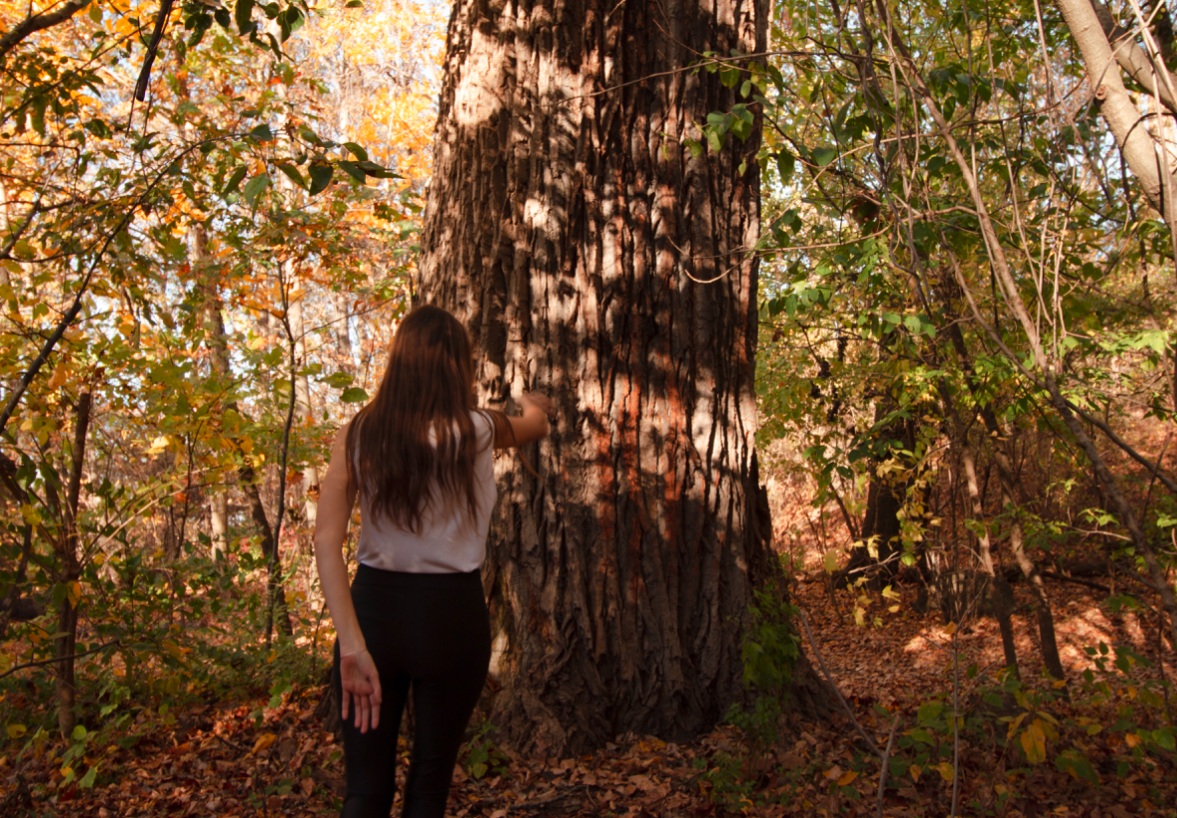
SEEDS, photographs from video by Carmen Bouyer and Carlo Pangalangan Labrador, 2016. Dance and seed saving practices in Inwood Hill Park, Manhattan
THRESHOLDS
Whenever we are standing on a piece of land, we are standing on a story. Here we journey to the birthplaces of agriculture; the caves and plains where humans first began to tend the land. Through two photographic series taken in Göbekli Tepe (ancient Mesopotamia, today Turkey) and Guilá Naquitz Cave (ancient Mesoamerica, today Mexico), Carmen Bouyer traces the origins of domestication: the moment when gathering turned to cultivation, and human relationship with plants shifted from reverence to control.
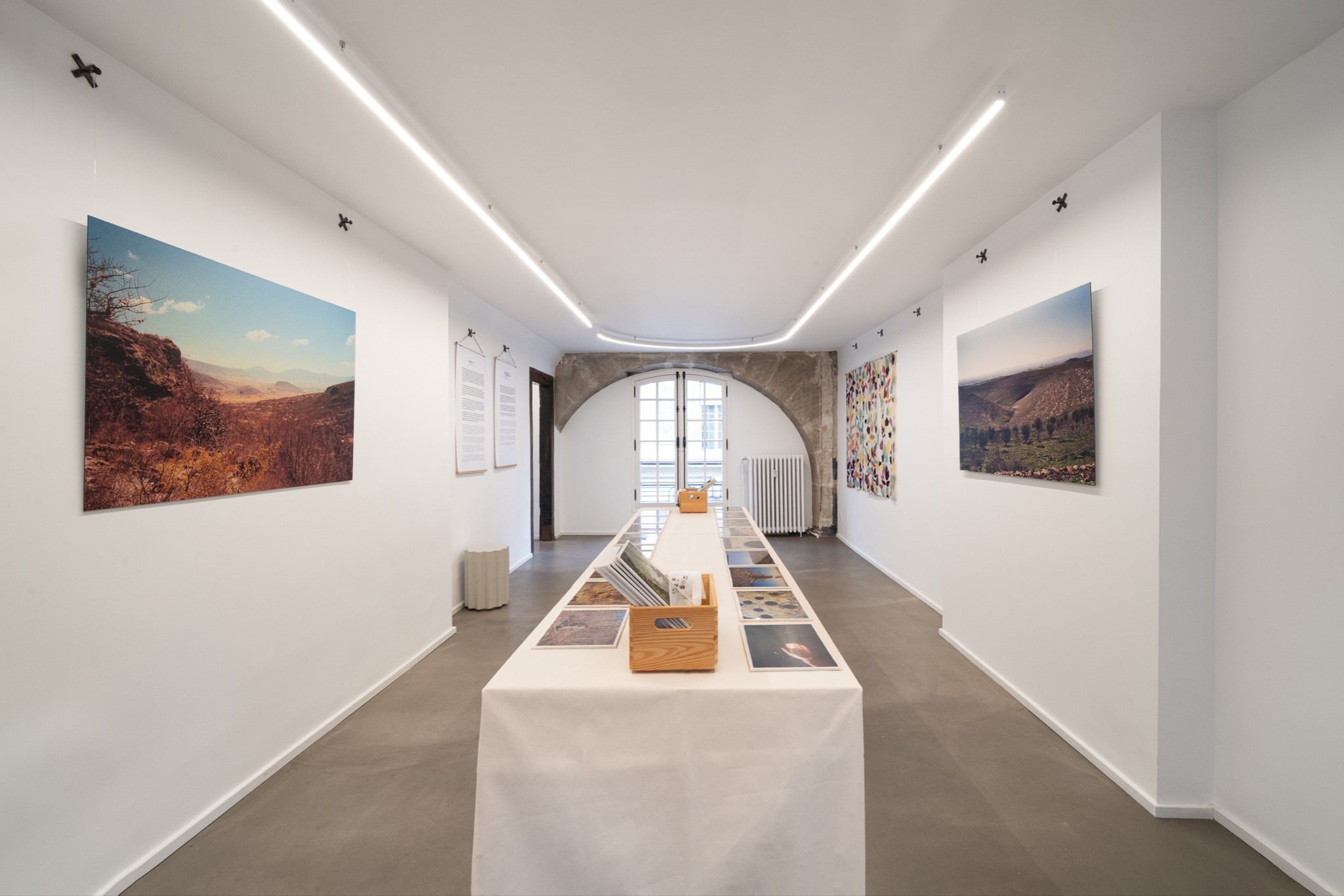
View from the show IN EVERYTHING, with two landscapes Mesoamerica (left) and Mesopotamia (right) facing each other — photograph by Holly Fogg, 2025, Wilde
The photographs depict these landscapes as thresholds where ritual, survival, and imagination first intertwined. Nearby, images from New York, İzmir, and Istanbul show contemporary foragers reclaiming these ancestral gestures in urban environments. Across time and geography, a quiet continuity emerges: the human body in dialogue with the generosity of the earth
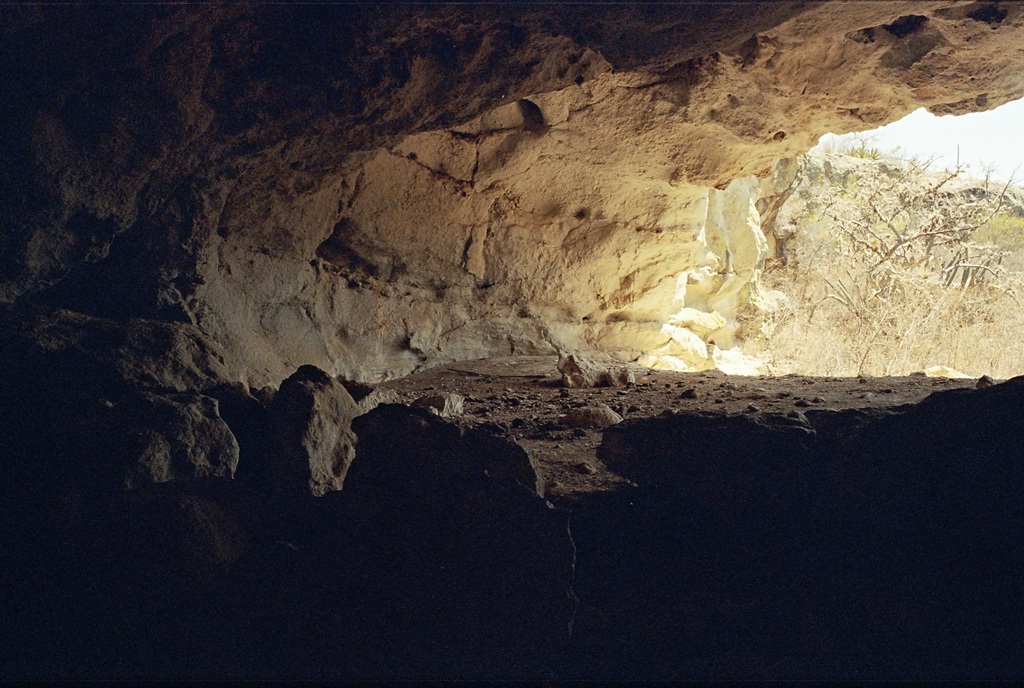
At the crossroad - Mesoamerica, photograph by Carmen Bouyer, 2017 : Guilá Naquitz Cave, near Oaxaca, South Mexico, where domesticated corn, bean and squash seeds have been found
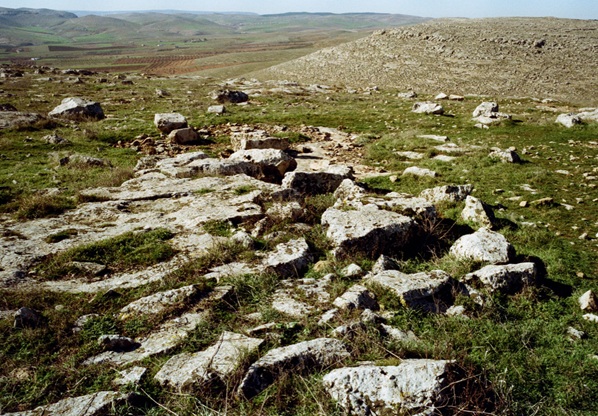
At the crossroad - Mesopotamia, photograph by Carmen Bouyer, 2015 : Gobekli Tepe archeological site, South Turkiye, in the region where domesticated rye and lentil seeds have been found
Initiated in 2015, following years of research into sustainable farming traditions in France, Japan, Turkey, and the United States, this project was born of a question: How might agriculture once again become an act of reciprocity? In an age of ecological unraveling, Bouyer turned to those who farm like gatherers, cultivating food forests and agroforestry systems that feed not only humans but entire ecosystems.
These practices, often described as wild agriculture or natural farming, propose a radical shift: to tend the land not as property but as a shared living commons. To grow food without domination, to cultivate without severing. By returning to the places where agriculture began, Bouyer asks us to reimagine our place within the web of life and re-learn from the intelligence of plants, soils, and waters.
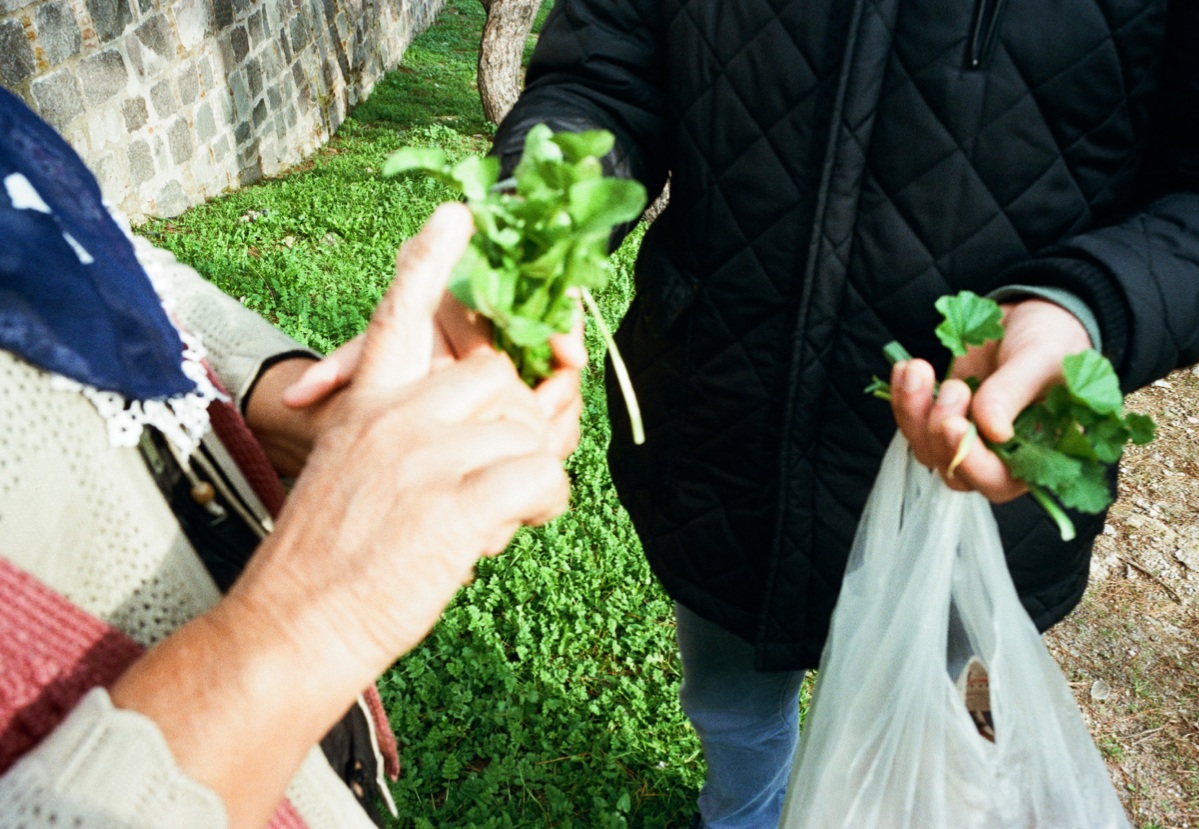
Yaban Bostan series, photograph by Carmen Bouyer, 2015 : Urban foraging of wild herbs in Izmir, Turkiye.
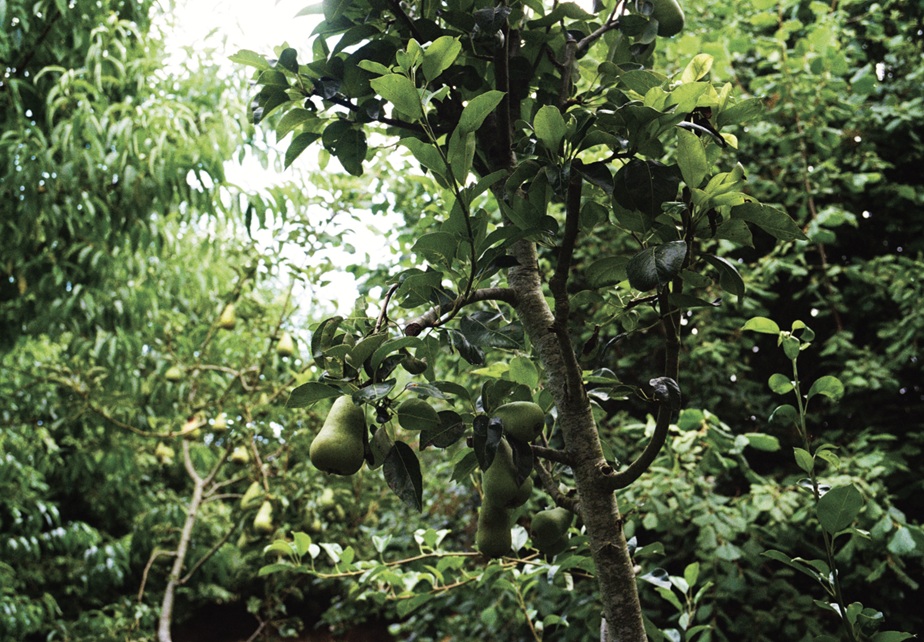
Les poires, photograph by Carmen Bouyer, 2023 : Food forest garden at Le Bec Hellouin permaculture farm, Normandy, France
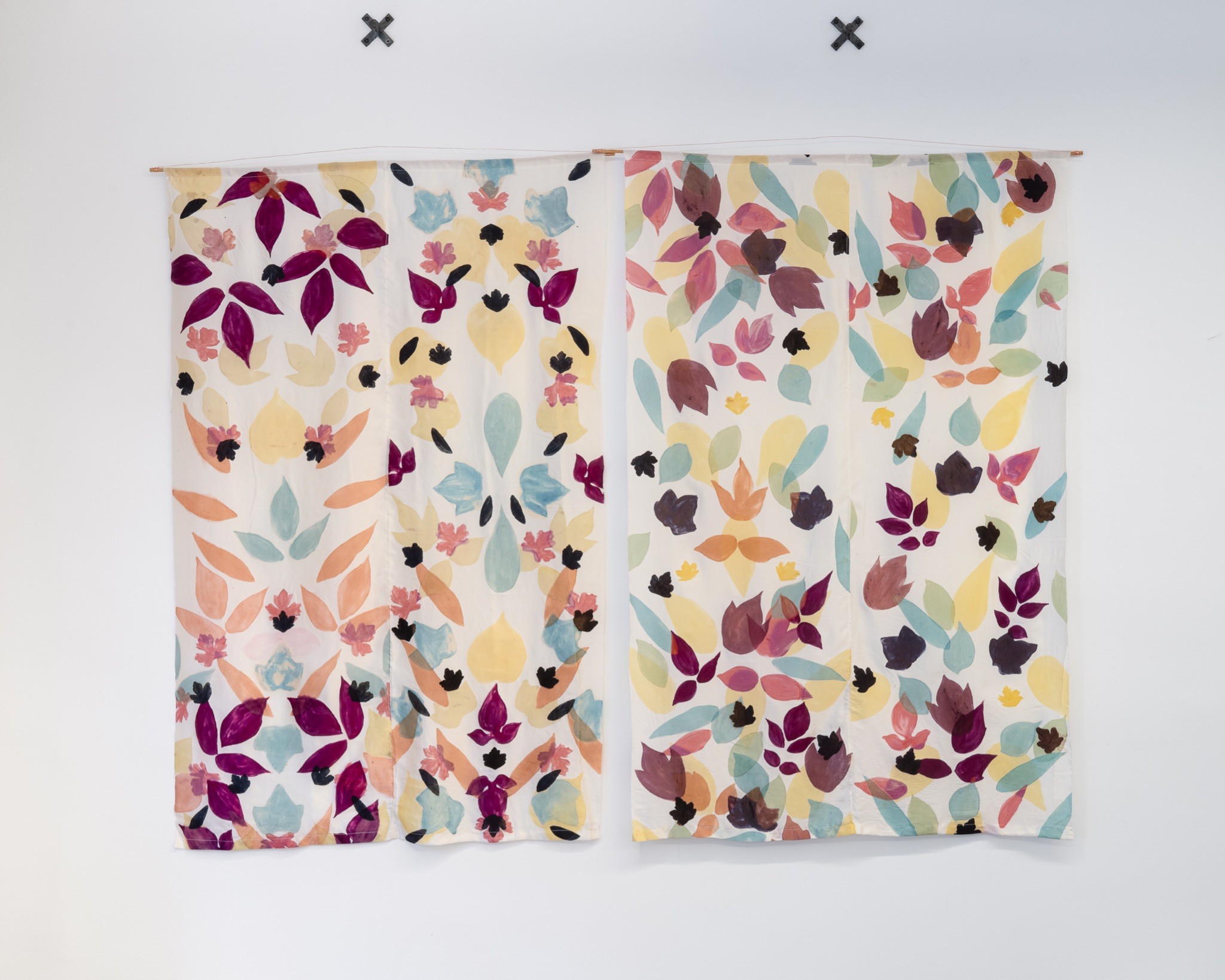
L’empreinte des fruitiers, paintings on silk with natural dyes by Carmen Bouyer, 2025 : Shapes from the fruit trees from Le Bec Hellouin permaculture farm food forest garden
HONORING THE EARTH MOTHER
Inspired by the archaeologist Marija Gimbutas, Carmen Bouyer has long been drawn to the traces of pre-Neolithic art: a time before the domestication of plants, when creative expression was intertwined with the cycles of the Earth. Her research has led her across Europe and Turkey, tracing the lineage of ancient Anatolian goddesses associated with wild nature and their transformations through Mediterranean mythologies.
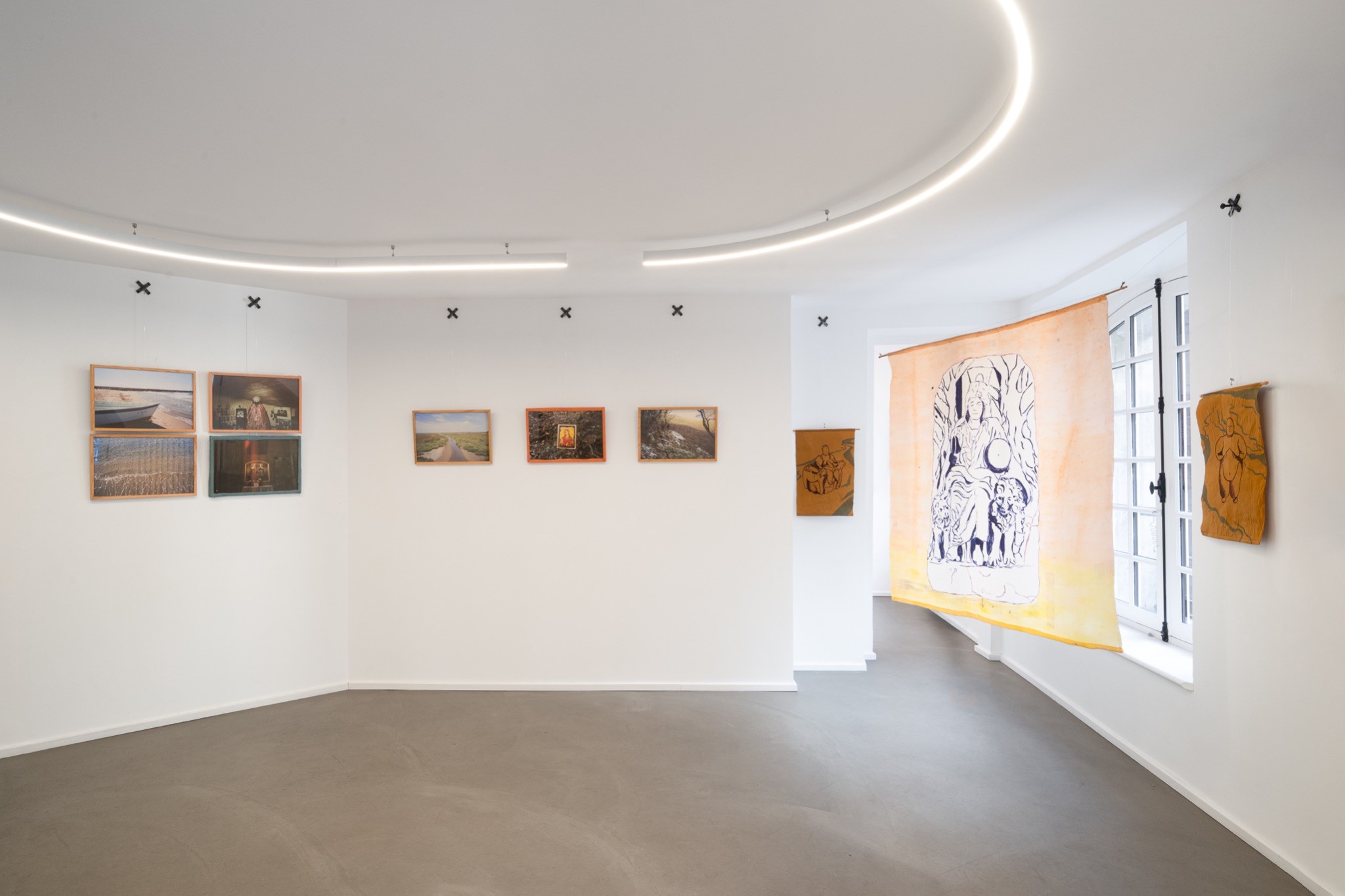
View from the show IN EVERYTHING — photograph by Holly Fogg, 2025
At the heart of this exploration lies a regeneration of the sacredness of the Earth Mother (Gaia consciousness) reminding us that we are interconnected as children of the Earth across gender, species, place, and time, unified in her love. Through the lens of matriarchal arts developed by philosopher Heide Göttner-Abendroth, Carmen Bouyer highlights egalitarian and peaceful cultures where mother values were centered: nurturing life and ensuring its continuity in good conditions for all.
Following the figure of the Great Mother as a vital archetype for planetary kinship Bouyer traces her persistence from Cybele or Magna Mater, to Artemis of Ephesus, and later through the Christian transformations of the Virgin Mary, Mary Magdalene and the Saintes-Maries de la Mer, Carmen Bouyer uncovers an unbroken current of feminine divinity finding roots in pre-Neolithic cultures. Since returning to France in 2018, she has deepened her study of European indigeneity in art, recognising in these traditions the enduring role of women as custodians of regeneration.
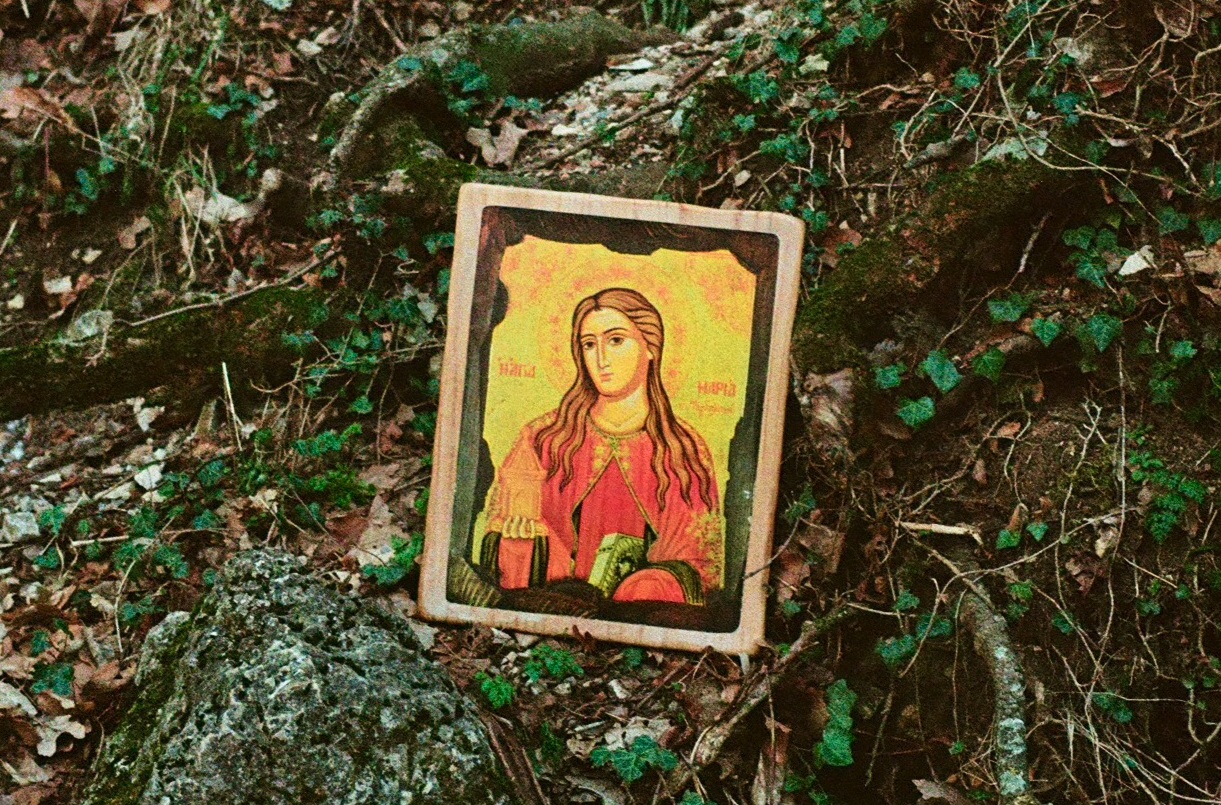
Marie Magdalena, photograph by Carmen Bouyer, 2024: Icon placed in tree roots at the sanctuary of la Sainte Baume, near Marseille, France